Rail-guided, dock-and-charge, dry cleaning — built for the tilt range and dust load of Rajasthan arrays. V1 prototype — field test data, subject to change.
The unit returns to its dock between cycles to charge and wait for its next scheduled run — no cabling across the array.
A rail-guided crawler moves panel to panel, engineered for the 10°–35° tilt range common on mid-size monocrystalline installs.
Your O&M team gets a record of what was cleaned and when — the data that makes RaaS billing verifiable, not a black box.
V1 Platform — Rail-guided crawler engineered for the 10°–35° tilt range common on mid-size monocrystalline installations. Dry cleaning, zero water per cycle. Uptime and cleaning-cycle performance data will be published once field validation is complete.
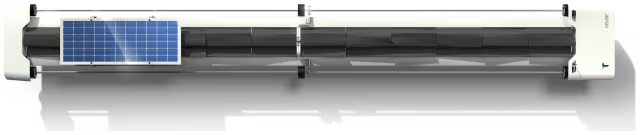
Rail-guided crawler with dual-drive motion and integrated docking system.
.avif)
Cleaning frequency is the lever, not just cleaning method. Industry data on Rajasthan solar operations shows that switching from weekly manual cleaning to daily autonomous cleaning is one of the highest-return operational changes available to a solar plant — recovering several percentage points of performance ratio that manual cleaning schedules structurally can't reach.
Illustrative estimate — industry data on cleaning frequency vs retained soiling.
What daily cleaning recovers in rupees for your plant.